Raziskave
Patent nad zdravili iz konoplje
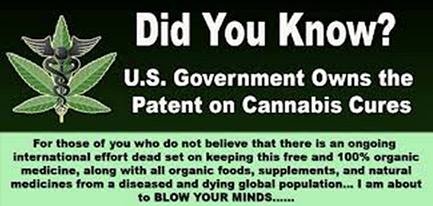
Vsaj od leta 1974 je kristalno jasno da konoplja zdravi raka.
Oglejte si morje študij ki to potrjujejo.
In seveda patente na temo konoplje in kaj v njih piše.
In kdo si jih lasti.
SINCE 1974 THE GOVERNMENT HAVE KNOWN THAT THE CHEMICALS FOUND IN THE CANNABIS PLANT CAN BE USED TO TREAT CANCER!!!
PLEASE LOOK BELOW FOR A LOT OF REVIEWED STUDIES FROM AROUND THE GLOBE WHICH CONFIRM THESE FINDINGS!!!
These same chemicals can have a unique effect on each vital organ, homeostatically and holistically aiding them in their roles. This includes the kidneys and the nephrological system.
Many scientific studies have reported that various cannabinoids (both natural and synthetic) exert a wide range of growth-inhibiting effects on cancer cells, including:
- Triggering cell death, through a mechanism called apoptosis.
- Stopping cells from dividing.
- Preventing new blood vessels from growing into tumours –a process termed angiogenesis.
- Reducing the chances of cancer cells to metastasize through the body, by stopping cells from moving or invading neighbouring tissue.
- Speeding up the cell’s internal ‘waste disposal machine’ –a process known as autophagy – which can lead to cell death.
Please Share
All the US patents on cannabinoids that proves cannabis is a safe effective medicine.
http://www.cannabisinternational.org/patents.php
US Patent 4837228
Cannabichromene (CBC)
http://www.google.com/patents/US4837228
US Patent 4189491
Glaucoma Treatment
glavkom
http://www.google.com/patents/US4189491
US Patent 5631297
Anandamide Compounds
http://www.google.com/patents/US5631297
US Patent 6132762
Pain, inflammation and arthritis
Bolečine , vnetja in artritis
http://www.google.com/patents/US6132762
US Patent 6410588
Cannabidiol and inflammatory diseases
Kanabidiol in vnetne bolezni (CBD)
http://www.google.com/patents/US6410588
US Patent 6974568
Treatment for coughs
kašelj
http://www.google.com/patents/US6974568
US Patent 6630507
Inflammatory and autoimmune diseases
Strokes, Alzheimer’s and Parkinson’s
Vnetne in avtoimunske bolezni
Kapi, Alzheimerjeva in Parkinsonova
http://www.google.com/patents/US6630507
US Patent 7741365
Novel polycyclic cannabinoid analogs
http://www.google.com/patents/US7741365
US Patent 7597910
Prostate cancer and prostatitis
Rak prostate in prostatitis
http://www.google.com/patents/US7597910
US Patent 7977107
Detecting traces of cannabinoids
Odkrivanje sledov kanabinoidov
http://www.google.com/patents/US7977107
US Patent 8071641
Diabetes and insulitis
Diabetes in insulitis
http://www.google.com/patents/US8071641
US Patent 8242178
Cannabidiol and autoimmune hepatitis
Kanabidiol in avtoimunski hepatitis
http://www.google.com/patents/US8242178
US Patent 8034843
Nausea, vomiting and motion sickness
Slabost, bruhanje in potovalna bolezen
http://www.google.com/patents/US8034843
New Cannabis vs. Cancer Patent Sought
http://www.naturalblaze.com/…/new-can...patent-so…
All Languages listed-International Association for Cannabis as Medicine
English-International Association for Cannabis as Medicine
http://cannabis-med.org/index.php…
Deutsch
http://cannabis-med.org/index.php?lng=de
Français
http://cannabis-med.org/index.php?lng=fr
Nederlands
http://cannabis-med.org/index.php?lng=nl
Espanol
http://cannabis-med.org/index.php?lng=es
Portugues
http://cannabis-med.org/index.php?lng=po
Italiano
http://cannabis-med.org/index.php?lng=it
PEER REVIEWED SCIENTIFIC STUDIES REGARDING CANNABIS AND CANCER:
Recenzirane strokovne študije glede marihuane in RAKA :
Cannabinoid receptor systems: therapeutic targets for tumour intervention. UK
Sistemi Kanabinoidnih receptorjev : terapevtski cilji za intervencijo tumorja.
http://www.ncbi.nlm.nih.gov/pubmed/14640910
High concentrations of cannabinoids activate apoptosis in human U373MG glioma cells. UK
Visoke koncentracije kanabinoidov aktivirajo apoptozo človeških U373MG gliomom celic.
http://www.ncbi.nlm.nih.gov/pubmed/18615640
Cannabinoid receptor agonists are mitochondrial inhibitors: a unified hypothesis of how cannabinoids modulate mitochondrial function and induce cell death. UK
Agonisti receptorjev Kanabinoidov so mitohondrijski inhibitorji: enotna hipoteza o tem, kako kanabinoidi modulirajo delovanje mitohondrijev in povzročijo smrt celice.
http://www.ncbi.nlm.nih.gov/pubmed/17931597
The cannabinoid delta(9)-tetrahydrocannabinol inhibits RAS-MAPK and PI3K-AKT survival signalling and induces BAD-mediated apoptosis in colorectal cancer cells. UK
Kanabinoid Delta (9 ) tetrahidrokanabinol zavira RAS-MAPK in PI3K-AKT preživetveno signalizacijo in inducira BAD-posredovano apoptozo pri rakavih celicah debelega črevesa.
http://www.ncbi.nlm.nih.gov/pubmed/17583570
Cannabis-induced cytotoxicity in leukemic cell lines: the role of the cannabinoid receptors and the MAPK pathway. UK
S konopljo povzročena citotoksičnost v levkemičnih celičnih linijah: Vloga receptorjev kanabinoidnih in MAPK poti.
http://www.ncbi.nlm.nih.gov/pubmed/15454482
Targeting cannabinoid receptors to treat leukemia: role of cross-talk between extrinsic and intrinsic pathways in Delta9-tetrahydrocannabinol (THC)-induced apoptosis of Jurkat cells. USA
Ciljanje kanabinoidnih receptorjev za zdravljenje levkemije: vloga presluha med zunanjo in notranjo potjo v Delta9-tetrahidrokanabinola (THC) inducirani apoptozi celic Jurkat.
http://www.ncbi.nlm.nih.gov/pubmed/15978942
The expression level of CB1 and CB2 receptors determines their efficacy at inducing apoptosis in astrocytomas. USA
Stopnja izraza CB1 in CB2 receptorjev določi njihovo učinkovitost pri induciranju apoptoze v astrocitomih.
http://www.ncbi.nlm.nih.gov/pubmed/20090845
Cannabidiol-induced apoptosis in human leukemia cells: A novel role of cannabidiol in the regulation of p22phox and Nox4 expression. USA
Kanabidiol inducirano apoptozo v človeške celice levkemije: Vloga kanabiola pri urejanju P22PHOX in Nox4 izražanja.
http://www.ncbi.nlm.nih.gov/pubmed/16754784
Cannabidiol enhances the inhibitory effects of delta9-tetrahydrocannabinol on human glioblastoma cell proliferation and survival. USA
Kanabidiol krepi zaviralne učinke delta9-tetrahidrokanabinola pri širjenju in preživetju človeških glioblastom celic.
http://www.ncbi.nlm.nih.gov/pubmed/20053780
Cannabinoids and the immune system. USA
Kanabinoidi in imunski sistem.
http://www.ncbi.nlm.nih.gov/pubmed/11854771
Delta(9)-tetrahydrocannabinol-induced apoptosis in the thymus and spleen as a mechanism of immunosuppression in vitro and in vivo. USA
Delta(9)-tetrahidrokanabinol inducirano apoptozo v timus in vranico kot mehanizem za imunosupresijo
http://www.ncbi.nlm.nih.gov/pubmed/12130702
Delta9-tetrahydrocannabinol-induced apoptosis in Jurkat leukemia T cells is regulated by translocation of Bad to mitochondria. USA
Delta9-tetrahidrokanabinol inducirane apoptoze v Jurkat levkemičnih celicah T, ki je urejeno s prenosom Bad do mitohondrijev
http://www.ncbi.nlm.nih.gov/pubmed/16908594
Cannabinoid-induced apoptosis in immune cells as a pathway to immunosuppression. USA
Kanabinoidno inducirana apoptoza v imunskih celicah, kot pot do imunosupresije.
http://www.ncbi.nlm.nih.gov/pubmed/19457575
Synthetic cannabinoid receptor agonists inhibit tumor growth and metastasis of breast cancer. USA
(Sintetični Kanabinoidni receptor Agonisti)zavira rast tumorja in metastaz raka dojke.
http://www.ncbi.nlm.nih.gov/pubmed/19887554
Cannabinoids for cancer treatment: progress and promise. USA
Kanabinoidi za zdravljenje raka: napredek in obljube.
http://www.ncbi.nlm.nih.gov/pubmed/18199524
Targeting CB2 cannabinoid receptors as a novel therapy to treat malignant lymphoblastic disease. USA
Ciljanje CB2 kanabinoidnih receptorjev kot nova terapija za zdravljenje malignih limfoblastnih bolezni.
http://www.ncbi.nlm.nih.gov/pubmed/12091357
Cannabinoid receptor as a novel target for the treatment of prostate cancer. USA
Kanabinoidni receptor kot nov cilj za zdravljenje raka prostate.
http://www.ncbi.nlm.nih.gov/pubmed/15753356
In vivo effects of cannabinoids on macromolecular biosynthesis in Lewis lung carcinomas. USA
Učinki kanabinoidov na makromolekularni biosintezi na Lewis pljučnih karcinomih.
http://www.ncbi.nlm.nih.gov/pubmed/616322
Cannabidiol as a novel inhibitor of Id-1 gene expression in aggressive breast cancer cells. USA
Kanabidiol kot zaviralec id-1 izraženih genov v agresivnih celicah raka dojke.
http://www.ncbi.nlm.nih.gov/pubmed/18025276
Cannabinoids as novel anti-inflammatory drugs. USA
Kanabinoidi kot nova protivnetna zdravila.
http://www.ncbi.nlm.nih.gov/pubmed/20191092
De novo-synthesized ceramide is involved in cannabinoid-induced apoptosis. SPAIN
Novo sintetizirani ceramid je vključen v kanabinoidnio-inducirane apoptoze.
http://www.ncbi.nlm.nih.gov/pubmed/11903061
Amphiregulin is a factor for resistance of glioma cells to cannabinoid-induced apoptosis. SPAIN
Amphiregulin je dejavnik za odpornost gliom celic na kanabinoidno inducirane apoptoze .
http://www.ncbi.nlm.nih.gov/pubmed/19229996
Cannabinoids and cell fate. SPAIN
Kanabinoidi in usoda celic.
http://www.ncbi.nlm.nih.gov/pubmed/12182964
Delta9-tetrahydrocannabinol induces apoptosis in human prostate PC-3 cells via a receptor-independent mechanism. SPAIN
Delta9-tetrahidrokanabinol inducira apoptozo v človeški PC-3 celici prostate preko mehanizma, ki je neodvisen od receptorjev.
http://www.ncbi.nlm.nih.gov/pubmed/10570948
Delta9-tetrahydrocannabinol induces apoptosis in C6 glioma cells. SPAIN
Delta9-tetrahidrokanabinol inducira apoptozo v C6 celicah glioma.
http://www.ncbi.nlm.nih.gov/pubmed/9771884
Cannabinoids inhibit glioma cell invasion by down-regulating matrix metalloproteinase-2 expression. SPAIN
Kanabinoidi zavirajo vdor glioma celic
http://www.ncbi.nlm.nih.gov/pubmed/18339876
Cannabinoids protect astrocytes from ceramide-induced apoptosis through the phosphatidylinositol 3-kinase/protein kinase B pathway. SPAIN
Kanabinoidi ščitijo astrocite iz Ceramidno-inducirane apoptoze
http://www.ncbi.nlm.nih.gov/pubmed/12133838
Hypothesis: cannabinoid therapy for the treatment of gliomas? SPAIN
Hipoteza: kanabinoidna terapija za zdravljenje gliomov?
http://www.ncbi.nlm.nih.gov/pubmed/15275820
Involvement of cannabinoids in cellular proliferation. SPAIN
Vključenost kanabinoidov v celično proliferacijo.
http://www.ncbi.nlm.nih.gov/pubmed/15638794
Effects on cell viability. SPAIN
Vpliv na sposobnost preživetja celic.
http://www.ncbi.nlm.nih.gov/pubmed/16596790
Cannabinoids induce apoptosis of pancreatic tumor cells via endoplasmic reticulum stress-related genes. SPAIN
Kanabinoidno inducirana apoptoza pankreasnih tumorskih celic prek endoplazemskih retikulum genov povezanih s stresom.
http://www.ncbi.nlm.nih.gov/pubmed/16818650
Cannabinoids and gliomas. SPAIN
Kanabinoidi in gliomi.
http://www.ncbi.nlm.nih.gov/pubmed/17952650
Delta9-tetrahydrocannabinol inhibits cell cycle progression in human breast cancer cells through Cdc2 regulation. SPAIN
Delta9-tetrahidrokanabinol zavira potek celičnega ciklusa v človeških celicah raka dojke s pomočjo regulacije Cdc2.
http://www.ncbi.nlm.nih.gov/pubmed/16818634
Opposite changes in cannabinoid CB1 and CB2 receptor expression in human gliomas. SPAIN
Nasprotne spremembe izražanja v kanabinoidnih CB1 in CB2 receptorjih v človeških gliomih.
http://www.ncbi.nlm.nih.gov/pubmed/20307616
Inhibition of skin tumor growth and angiogenesis in vivo by activation of cannabinoid receptors. SPAIN
Zaviranje rasti tumorjev kože ... z aktivacijo kanabinoidnih receptorjev.
http://www.ncbi.nlm.nih.gov/pubmed/12511587
Inhibition of human tumour prostate PC-3 cell growth by cannabinoids R(+)-Methanandamide and JWH-015: involvement of CB2. SPAIN
Inhibicija rasti človeškega tumorja prostate PC - 3 celic s kanabinoidi R ( + ) - Methanandamide in JWH - 015 : vključevanje CB2 .
http://www.ncbi.nlm.nih.gov/pubmed/19690545
Control of the cell survival/death decision by cannabinoids. SPAIN
http://www.ncbi.nlm.nih.gov/pubmed/11269508
The stress-regulated protein p8 mediates cannabinoid-induced apoptosis of tumor cells. SPAIN
http://www.ncbi.nlm.nih.gov/pubmed/16616335
The CB2 cannabinoid receptor signals apoptosis via ceramide-dependent activation of the mitochondrial intrinsic pathway. SPAIN
http://www.ncbi.nlm.nih.gov/pubmed/16624285
p38 MAPK is involved in CB2 receptor-induced apoptosis of human leukaemia cells. SPAIN
http://www.ncbi.nlm.nih.gov/pubmed/16139274
Cannabinoids and ceramide: two lipids acting hand-by-hand. SPAIN
http://www.ncbi.nlm.nih.gov/pubmed/15958274
Endocannabinoids: a new family of lipid mediators involved in the regulation of neural cell development. SPAIN
http://www.ncbi.nlm.nih.gov/pubmed/16787257
Anti-tumoral action of cannabinoids: involvement of sustained ceramide accumulation and extracellular signal-regulated kinase activation. SPAIN
http://www.ncbi.nlm.nih.gov/pubmed/10700234
Cannabinoid receptors as novel targets for the treatment of melanoma. SPAIN
http://www.ncbi.nlm.nih.gov/pubmed/17065222
JunD is involved in the antiproliferative effect of Delta9-tetrahydrocannabinol on human breast cancer cells. SPAIN
http://www.ncbi.nlm.nih.gov/pubmed/18454173
Cannabinoid action induces autophagy-mediated cell death through stimulation of ER stress in human glioma cells. SPAIN
http://www.ncbi.nlm.nih.gov/pubmed/19425170
Cannabinoids induce glioma stem-like cell differentiation and inhibit gliomagenesis. SPAIN
http://www.ncbi.nlm.nih.gov/pubmed/17202146
Down-regulation of tissue inhibitor of metalloproteinases-1 in gliomas: a new marker of cannabinoid antitumoral activity? SPAIN
http://www.ncbi.nlm.nih.gov/pubmed/17675107
Endocannabinoids and fatty acid amides in cancer, inflammation and related disorders. ITALY
http://www.ncbi.nlm.nih.gov/pubmed/11106791
Estrogenic induction of cannabinoid CB1 receptor in human colon cancer cell lines. ITALY
http://www.ncbi.nlm.nih.gov/pubmed/18938775
Antitumor effects of cannabidiol, a nonpsychoactive cannabinoid, on human glioma cell lines. ITALY
http://www.ncbi.nlm.nih.gov/pubmed/14617682
The endocannabinoid anandamide neither impairs in vitro T-cell function nor induces regulatory T-cell generation. ITALY
http://www.ncbi.nlm.nih.gov/pubmed/19189659
Cannabinoid derivatives induce cell death in pancreatic MIA PaCa-2 cells via a receptor-independent mechanism. ITALY
http://www.ncbi.nlm.nih.gov/pubmed/16500647
The CB1/CB2 receptor agonist WIN-55,212-2 reduces viability of human Kaposi's sarcoma cells in vitro. ITALY
http://www.ncbi.nlm.nih.gov/pubmed/19539619
Antitumor activity of plant cannabinoids with emphasis on the effect of cannabidiol on human breast carcinoma. ITALY
http://www.ncbi.nlm.nih.gov/pubmed/16728591
Cannabinoids in intestinal inflammation and cancer. ITALY
http://www.ncbi.nlm.nih.gov/pubmed/19442536
The endocannabinoid system as a target for the development of new drugs for cancer therapy. ITALY
http://www.ncbi.nlm.nih.gov/pubmed/12723496
Apoptosis induced in HepG2 cells by the synthetic cannabinoid WIN: involvement of the transcription factor PPARgamma. ITALY
http://www.ncbi.nlm.nih.gov/pubmed/19059457
Endocannabinoids as emerging suppressors of angiogenesis and tumor invasion (review). ITALY
http://www.ncbi.nlm.nih.gov/pubmed/17342320
The non-psychoactive cannabidiol triggers caspase activation and oxidative stress in human glioma cells. ITALY
http://www.ncbi.nlm.nih.gov/pubmed/16909207
Cannabinoids as potential new therapy for the treatment of gliomas. ITALY
http://www.ncbi.nlm.nih.gov/pubmed/18088200
The endogenous cannabinoid anandamide inhibits human breast cancer cell proliferation. ITALY
http://www.ncbi.nlm.nih.gov/pubmed/9653194
Anandamide induces apoptosis in human cells via vanilloid receptors. Evidence for a protective role of cannabinoid receptors. ITALY
http://www.ncbi.nlm.nih.gov/pubmed/10913156
Cannabinoid receptor activation induces apoptosis through tumor necrosis factor alpha-mediated ceramide de novo synthesis in colon cancer cells. ITALY
http://www.ncbi.nlm.nih.gov/pubmed/19047095
Plant-derived cannabinoids modulate the activity of transient receptor potential channels of ankyrin type-1 and melastatin type-8. ITALY
http://www.ncbi.nlm.nih.gov/pubmed/18354058
A metabolically stable analogue of anandamide, Met-F-AEA, inhibits human thyroid carcinoma cell lines by activation of apoptosis. ITALY
http://www.ncbi.nlm.nih.gov/pubmed/19189054
Endocannabinoids in the immune system and cancer. ITALY
http://www.ncbi.nlm.nih.gov/pubmed/12052046
R(+)-methanandamide-induced apoptosis of human cervical carcinoma cells involves a cyclooxygenase-2-dependent pathway. GERMANY
http://www.ncbi.nlm.nih.gov/pubmed/19015962
Antitumorigenic effects of cannabinoids beyond apoptosis. GERMANY
http://www.ncbi.nlm.nih.gov/pubmed/19889794
Up-regulation of cyclooxygenase-2 expression is involved in R(+)-methanandamide-induced apoptotic death of human neuroglioma cells. GERMANY
http://www.ncbi.nlm.nih.gov/pubmed/15361550
Cannabinoid receptors in human astroglial tumors. GERMANY
http://www.ncbi.nlm.nih.gov/pubmed/16893424
Cannabinoids induce cancer cell proliferation via tumor necrosis factor alpha-converting enzyme (TACE/ADAM17)-mediated transactivation of the epidermal growth factor receptor. GERMANY
http://www.ncbi.nlm.nih.gov/pubmed/15026328
Cannabidiol inhibits cancer cell invasion via upregulation of tissue inhibitor of matrix metalloproteinases-1. GERMANY
http://www.ncbi.nlm.nih.gov/pubmed/19914218
Pharmacokinetics and pharmacodynamics of cannabinoids. GERMANY
http://www.ncbi.nlm.nih.gov/pubmed/12648025
Delta 9-tetrahydrocannabinol inhibits cell cycle progression by downregulation of E2F1 in human glioblastoma multiforme cells. ISRAEL
http://www.ncbi.nlm.nih.gov/pubmed/17934890
Cannabinoids and cancer. ISRAEL
http://www.ncbi.nlm.nih.gov/pubmed/16250836
Cannabinoids in health and disease. ISRAEL
http://www.ncbi.nlm.nih.gov/pubmed/18286801
A cannabinoid quinone inhibits angiogenesis by targeting vascular endothelial cells. ISRAEL
http://www.ncbi.nlm.nih.gov/pubmed/16571653
Gamma-irradiation enhances apoptosis induced by cannabidiol, a non-psychotropic cannabinoid, in cultured HL-60 myeloblastic leukemia cells. ISRAEL
http://www.ncbi.nlm.nih.gov/pubmed/14692532
An endogenous cannabinoid (2-AG) is neuroprotective after brain injury. ISRAEL
http://www.ncbi.nlm.nih.gov/pubmed/11586361
HU-331, a novel cannabinoid-based anticancer topoisomerase II inhibitor. ISRAEL
http://www.ncbi.nlm.nih.gov/pubmed/17237277
Predominant CB2 receptor expression in endothelial cells of glioblastoma in humans. SWITZERLAND
http://www.ncbi.nlm.nih.gov/pubmed/19480992
Cannabinoid receptor 1 is a potential drug target for treatment of translocation-positive rhabdomyosarcoma. SWITZERLAND
http://www.ncbi.nlm.nih.gov/pubmed/19509271
Cannabinoid receptor ligands as potential anticancer agents--high hopes for new therapies? SWITZERLAND
http://www.ncbi.nlm.nih.gov/pubmed/19589225
Arachidonylethanolamide induces apoptosis of human glioma cells through vanilloid receptor-1. SWITZERLAND
http://www.ncbi.nlm.nih.gov/pubmed/15453094
Expression of cannabinoid receptors type 1 and type 2 in non-Hodgkin lymphoma: growth inhibition by receptor activation. SWEDEN
http://www.ncbi.nlm.nih.gov/pubmed/18546271
Cannabinoid receptor-mediated apoptosis induced by R(+)-methanandamide and Win55,212-2 is associated with ceramide accumulation and p38 activation in mantle cell lymphoma. SWEDEN
http://www.ncbi.nlm.nih.gov/pubmed/16936228
Cannabinoid receptor ligands mediate growth inhibition and cell death in mantle cell lymphoma. SWEDEN
http://www.ncbi.nlm.nih.gov/pubmed/16337199
Potentiation of cannabinoid-induced cytotoxicity in mantle cell lymphoma through modulation of ceramide metabolism. SWEDEN
http://www.ncbi.nlm.nih.gov/pubmed/19609004
The endocannabinoid system of the skin in health and disease: novel perspectives and therapeutic opportunities. HUNGARY
http://www.ncbi.nlm.nih.gov/pubmed/19608284
Pharmacological synergism between cannabinoids and pa*censored*axel in gastric cancer cell lines. JAPAN
http://www.ncbi.nlm.nih.gov/pubmed/19394652
Different views on the association between cannabinoids and cancer. SLOVAKIA
http://www.ncbi.nlm.nih.gov/pubmed/16835997
Effect of a synthetic cannabinoid agonist on the proliferation and invasion of gastric cancer cells. KOREA
http://www.ncbi.nlm.nih.gov/pubmed/20336665
Cannabinoid 2 receptor induction by IL-12 and its potential as a therapeutic target for the treatment of anaplastic thyroid carcinoma. SAUDI ARABIA
http://www.ncbi.nlm.nih.gov/pubmed/18197164
Cannabinoids in the treatment of cancer. NEW ZEALAND
http://www.ncbi.nlm.nih.gov/pubmed/19442435
Cannabinoids down-regulate PI3K/Akt and Erk signalling pathways and activate proapoptotic function of Bad protein. POLAND
http://www.ncbi.nlm.nih.gov/pubmed/15451022
Antineoplastic and apoptotic effects of cannabinoids. N-acylethanolamines: protectors or killers? UKRAINE
http://www.ncbi.nlm.nih.gov/pubmed/18438336
A comparative study on cannabidiol-induced apoptosis in murine thymocytes and EL-4 thymoma cells. TAIWAN
http://www.ncbi.nlm.nih.gov/pubmed/18387516
The dual effects of delta(9)-tetrahydrocannabinol on cholangiocarcinoma cells: anti-invasion activity at low concentration and apoptosis induction at high concentration. THAILAND
http://www.ncbi.nlm.nih.gov/pubmed/19916793
Konoplja zdravi, zato zaupaj naravi
p.s: ker mi ni vseeno kaj bo jutri - zu3 se na fu3
Arhivska objava, izvirnik: sksk.si